

What does it mean to "know a foreign language well"?
We can say that knowing English well is a satisfying achievement for foreign language proficiency. Thus, what exactly does it mean to know a foreign language? If what is meant is that Beysukent students speak English without difficulty, succeed in university preparatory exams, do not have difficulty in English lessons throughout their education life, or write 'I speak English' on their CVs years later; all these are the competencies already in the saddlebags of students who have been studying English for years.

However, we believe that this goal is not enough. We know that there is a great need for individuals who are fluent in English in all fields in our country, from academia to the private sector. It is a well-known fact that even in many national companies, the top executives are of foreign origin, or that competent citizens in such institutions cannot be promoted because of their English proficiency. Therefore, knowing English requires certain competencies beyond being able to communicate in this language.
In terms of the CIC Language Teaching Approach, knowing English well means demonstrating the following skills:
- Throughout their academic years of study, our students will be able to demonstrate a high level of language proficiency in four communication skills: following scholarly periodicals; producing academic texts such as reports, theses and dissertations; making oral presentations in areas of specialization that require professional knowledge and competencies; and being able to understand and communicate with native speakers of English without difficulty.
- To be able to use the four communication skills in oral and written contexts involving professional and technical information in business life, in accordance with the institutional, cultural and human practices specific to the relevant field; to demonstrate appropriateness, courtesy and etiquette in communicating in English according to the degree of formality required by the communicative context.
- At all levels of academic education or work life, individuals' ability to understand people from other cultures and to communicate well in a foreign language can be realized through the development of intercultural communicative competences, which is the theoretical basis of the CIC Language Teaching Approach.
- Intercultural communicative competences aim at common global behavioral criteria for people communicating in English in international contexts and envisage the training of English students as diplomats. Regardless of one's level of English proficiency, the only way to communicate effectively in academia and business is to know the rules of international cultural communication.
- Today, about four times as many native English speakers communicate in English. Knowing the culture of the target language means not only knowing British or American culture, but also being open-minded, fair-minded, understanding and empathetic towards all cultures of the world.
- There are different varieties of English developed by hundreds of different non-native speakers. The global English formed by these varieties is discussed in fields such as 'World Englishes', 'English as an International Language' and 'English as a Lingua Franca'. This is one of the theoretical foundations of the CIC Language Teaching Approach.
- Within the framework of all these determinations and goals, raising multicultural and multilingual individuals will contribute to the accurate and effective expression of national culture. It is known that individuals with developed intercultural communicative competencies do not have difficulty in explaining and sharing their own culture.

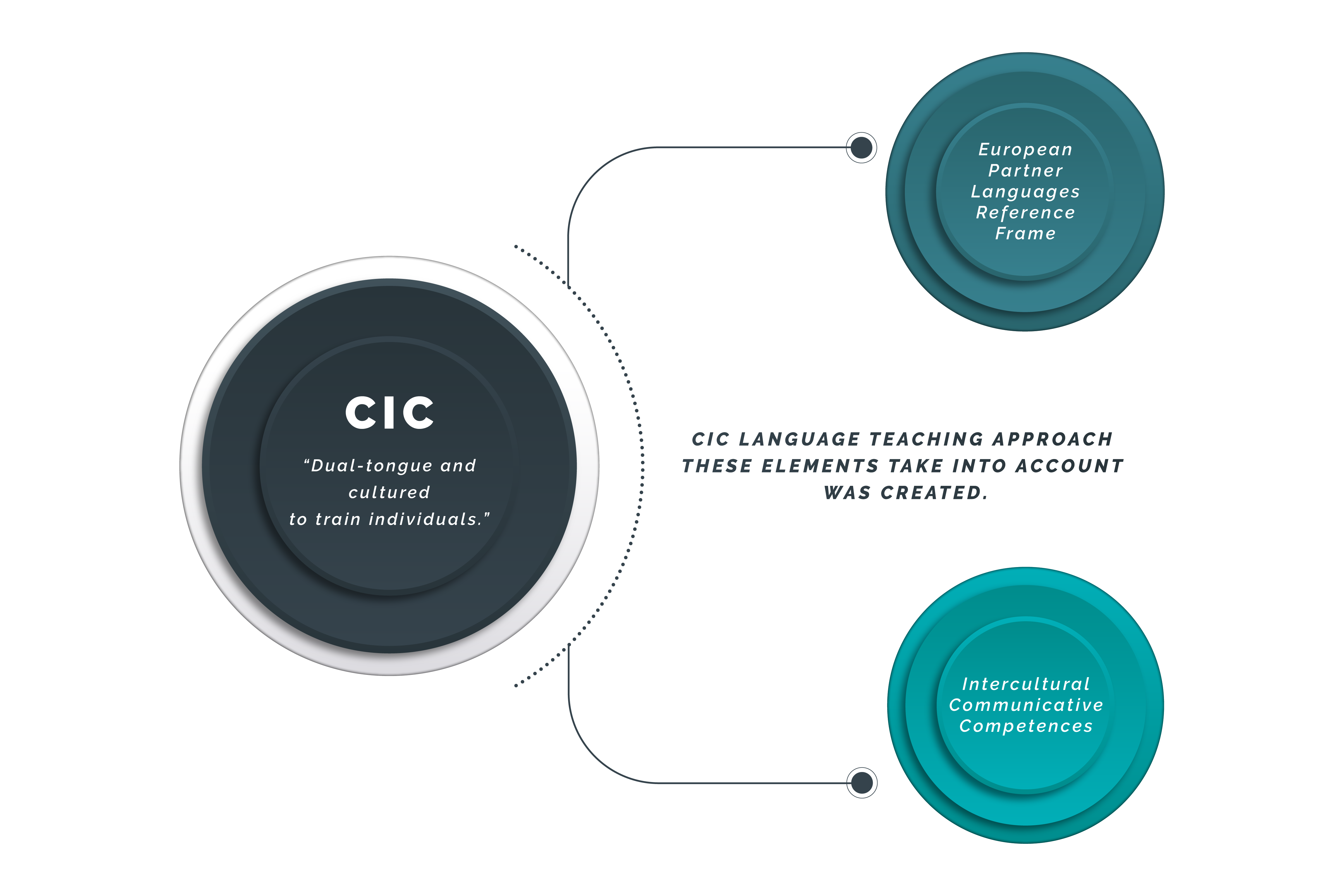
In this sense, the CIC Language Teaching Approach has been created taking into account the following elements:
- The Common European Framework of Reference for Languages is taken as a basis for defining theories and approaches to learning English.
- In describing the dynamics and nature of communicative language competences, theories of intercultural communicative competence describe the characteristics of practices in and out of the classroom.
- Educating our students as world citizens in terms of cultural communication serves our national priorities and goals in academia, the civil service and the private sector.
4. Realizing these goals requires long-term planning. One of the key elements of planning is the class and activity hours, where the learning ecology created by our teachers and students together comes to life. In the table below, you can see our class hours from kindergarten to the end of middle school.
Beysukent Schools Class and Activity Hours
Education Level | Age Groups | Weekly Class Hours | Out of Class Activities | Annual Total Course Hours |
Pre-school | Ages 3, 4 | 16 | 40* | 576 |
Pre-school | Ages 5, 6 | 16 | 40 | 576 |
Total Lesson Hours in Preschool** Education: | 1152 | |||
First Grade | 7 | 16 | 48 | 576 |
Second Grade | 8 | 16 | 72 | 576 |
Third Grade | 9 | 16 | 72 | 576 |
Fourth Grade | 10 | 16 | 72 | 576 |
Total Lesson Hours in Primary School: | 2304 | |||
Fifth Grade | 11 | 15 | 90 | 540 |
Sixth Grade | 12 | 12 | 72 | 432 |
Seventh Grade | 13 | 12 | 72 | 432 |
Eighth Grade | 14 | 6 | 72 | 216 |
Total Lesson Hours in Secondary School: | Total Lesson Hours in Secondary School: | Total Lesson Hours in Secondary School: | 1620 | |
Ninth Grade | 15 | 14 | 120 | 504 |
Tenth Grade | 16 | 10 | 120 | 360 |
Eleventh Grade | 17 | 4 | 120 | 144 |
Twelfth Grade | 18 | - | - | - |
Total Lesson Hours at High School: | 1008 | |||
Total Lesson Hours in Primary and Secondary Education | 6084 | |||
* Activity hours include all tasks, assignments and project work that students do outside the classroom, either individually or collaboratively. These hours are excluded from the calculation of total course hours.
** The total number of hours taught at the basic education level does not include additional courses, make-up programs, support courses at the beginning and throughout the semester, and other supplementary English programs.
 English (UK)
  Türkçe